Showing posts with label south sudan. Show all posts

Saturday, 23 February 2013

Famous on the internets!

Go team!


Thanks to Voice of America for writing two great stories about my awesome team in Rumbek, South Sudan!

South Sudan Women Think Outside the Box [VOA]
Sold, Abused - The Plight of South Sudan's Forgotten Women [VOA]


Wednesday, 20 February 2013

Saturday, 29 September 2012

We're number 2! We're number 2! (for insecurity... yeah!)

Lovely to be back from R&R. I spent 2 weeks in the Europe eating and drinking all the things. I think I visited every H&M on the continent to replace my wardrobe that has slowly eroded into nothing over the last seven months. Have to be well dressed to face Lakes State's recent promotion to second most insecure area!

When I left RBK there were altercations with the police and wildlife services over cut in pay. Without going into details, the event was a lot worse than what the media makes it out to be (*cough* there is absolutely no suppression of the media here). I've returned to something a bit worse.

Currently it is the season for traditional dancing and gatherings. Which on the surface is really cool. There are a lot of cattle keepers in town, there are a lot of flags and singing and dancing and running and drumming etc etc. But there are also a lot of guns. There have been shootings everyday at schools, on the street, late at night. There have also been a number of break ins to businesses, kidnappings and threats to business owners, and systemic attacks against East Africans and South Sudanese that are not from Lakes (Lakes is also just getting over a malaria epidemic and  MASSIVE floods that displaced an estimated 23,000 people in Awerial County in Lakes).

Next week salaries are released again. There is still no money to pay the armed services their full salaries. We've also been informed that the SPLA may not get their full salaries either - which may make them a bit peeved. They were the only government body to be paid, in full (or at all) since the beginning of austerity measures. This place will be one to watch. 

FORTUNATELY, the Sudanese and South Sudanese executives have agreed on enough to start the oil  flowing again and solve some of the citizenship issues. This will still take 6 months for any revenues, but they will both be eligible for loans. There's also a rumour that the Qataries threw a few hundred million dollars into the pot to help float this place (and promptly decrease the already artificially low exchange rate... sigh...). So I hope everything will calm down a bit and everyone can get paid. What the deal did not do is tough the disputed territories on the borded of the North and South. Nor did it discuss how the North is air dropping arms into Jonglei State, or how the South is turning a blind eye to militias operating openly out of Unity State. But foreign enemies are a nice distraction from the internal issues that both countries face. So I guess they may not want to clean these up too quickly?

 
Long story short. South Sudan. One to watch?

Friday, 31 August 2012

Cows for Schools


I was really happy to read this great initiative from the government of Unity State in South Sudan. They are selling cows to fund school construction. It may not come across as a big deal - selling property or investments to pay for construction projects - but I'm not sure that people outside South Sudan understand the significance of THE COW.

Cows are taken pretty seriously here. Almost everyone is named after a type of cow. Much like the Inuit have hundreds of words of snow, the Dinka and Nuer have hundreds of names for Cows. I myself have 3 Dinka names (and counting!): Allual (Red cow - I got this one when I arrived. I was likely fairly red), Yar (White Cow) and and Akuor (White Cow with a Black Spot over the Eye). Cows are also the economy here. You cannot get married without paying for your wife in cows (where I live... many cows), people measure their wealth in cows, and in some areas people will starve rather than kill a cow for food. A good looking cow can fetch you well over $1000, so 30 cows can go quite far.

South Sudan has one of the lowest literacy rates and school enrollment rates in the world. They are in desperate need of schools (and teachers... and teachers being paid). They're budget also relies very heavily on international donors and the work of aid agencies to provide almost all basic services. With aid budgets shrinking, there is less money for school construction funding by the international community. Moreover donors would like to see the government starting to take responsibility for the costs partially or in full. To be frank, it unfortunately rare to have governments here willing to support footing the bill even partially for projects.

As many know, earlier this year ROSS shut down oil production over borders disputes and transfer fees with Sudan. Now that ROSS has essentially no money -  the Government is enforcing austerity measures. They are cutting the civil service (or just not paying them - ministry staff I work with have not been paid in 2 months), reducing or halting projects etc etc. This leaves the average man, woman, child out in an even more vulnerable spot, with even fewer services.

Which is why I'm pretty impressed with the government in Unity State. I think they are setting a good example for the rest of the country. Well done.

Friday, 27 July 2012

Happy Olympics!

The Olympics have started! Congratulations to Guor Marial! The first athlete to compete in the games for South Sudan in the marathon. Well - under the Olympic Flag. South Sudan doesn't have a national olympic committee yet. But he's still there!


He has a pretty amazing story and he will surely make South Sudan proud.


(and go Canada too!)

Wednesday, 11 July 2012

End of an era at Juba Airport

Ladies and gentlemen, gone are the days that one can literally lounge in an airport lounge. Juba Airport took lounging seriously, filling the departure area with large, bulky, comfortable (albeit smelly and sticky) sofas accompanied with coffee tables (of course!) arranged around the one airconditioner and television set.

But this is no more.


Juba is a real international airport. In a real new country. Two out of the three baggage scanners work! (the other just gets in the way in the arrivals area... but that is another post for another day)


The lounge is now filled with practical seating for many. The television remains.

In other news, here are two interesting opposing views on pressure groups and South Sudanese independence from Reuters and Foreign Policy.

Monday, 9 July 2012

Wednesday, 4 July 2012

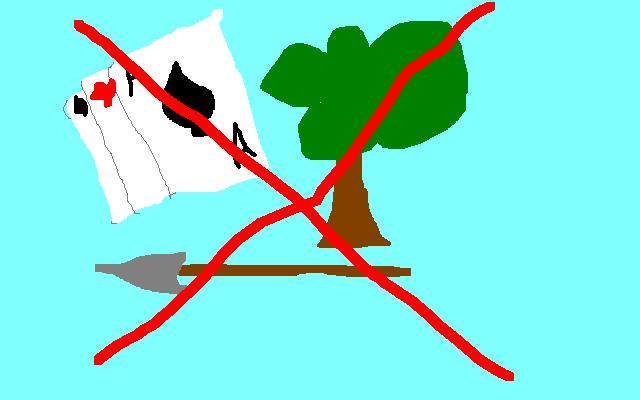
No sticks, no spears, no fun!

Cueibet County in Lakes State (where I work), has banned sticks, and spears in town. Although I feel people should be able to make their own decisions, spears are pretty common and dangerous.

This isn't all that was banned.
"Malek’s order also banned people from using playing cards, normally under trees, during working hours, making it a prosecutable offence."


No fun city. Next comes dancing and music.

Thursday, 28 June 2012

Arming South Sudan

There is a new report from Amnesty International accusing China, Ukraine and Russia of fueling conflict in South Sudan by arming both the army - the Sudan People's Liberation Army (SPLA) -  and the militia groups, the South Sudan Liberation Army (SSLA).

Amnesty says it has documented human rights violations by both these groups using brand new weapons, and asks that the countries listed above (and others) stop sending weapons to groups (or countries) that cannot guarantee the weapons will not be used to carry our human rights violations.

The SPLA has called the report "bias" and "unrealistic" of course.


Friday, 25 May 2012

Nairobi Eye - or Fly is the worst!

This ant is neither an Eye or a Fly. But it smears acid when you hit it, causing blisters and burns.

Pleasant.


I really thought I had a strange disease. Something off of house like amoeba of the brain.

Nope. Just an acid spewing ant.

Monday, 14 May 2012

What's in a name anyways?

My last flight up to Rumbek, I was placed on a milk run that had me stopping in Bor and Mabior in Jonglei State, before going to Rumbek. Lakes State.

One would assume a state of many lakes?

I had noticed on the ground a lack of visible, natural, bodies of water in the state, but it wasn't until I was airborne that I realised that every other state in South Sudan must have more visible bodies of water than Lakes State.


Also - this is not helping calm war rhetoric. 

Thursday, 3 May 2012

My that's a big bag you have?


Do you really need that much stuff for one week?

I have heard this a lot in Juba. I went down for a week with my 70L backpack. Admittedly it was a bit too big of a bag coming down. But it was only 1/3 full. I'd brought it with a purpose. To bring back food. 

I'd made the fatale flaw of not booking extra cargo for food when I first moved up. (NB: I don't actually mean "food". I mean chocolate, cookies, nuts, gum, cheese etc.) I went to the grocery store, took note of what I needed to get and then figured I’d have people bring stuff up to me, or I could stock up later.

Wrong.

When I went back to find this.


Instead I got this.
Clearly I hadn’t learned from the Great Iraqi Diet Coke Shortage of 2008. Where foreign workers would drive to the borders of Turkey, Syria and Iran if they heard so much as a rumour that a shop owner had a spare flat of the silver bullet.

The rule is: If you see something you think could be a rare commodity… like Special K  - or in my case McVities Digestives – YOU BUY ALL OF THEM BECAUSE YOU NEVER KNOW WHEN IT WILL COME BACK.

So I went to the store and bought everything. 

And that is why my bag is so big. 

How did I just learn about this?

What Should Africa Call Me? 

Aaaaaand the UN is threatening non-military sanctions... which I'm sure both sides are really concerned about, judging by the tank I saw loaded on a boat heading north at Juba Port.

Sanctionz. Vrrryyy Srrrrrrssssssss.

Sunday, 29 April 2012

Eating my way through Juba

ZOMG I had ice cream, and chicken caesar salad, and thai food, and baguette, and a burger with avocado and bacon on it. I think I'll reach my goal of gaining 10lbs.

But other than the food, Juba is kind of an insane city full of awful prefab.

I kind of miss Rumbek?!

See you tomorrow cows!

oh ya. and this. #PissingContest

Thursday, 12 April 2012

Monday, 9 April 2012

There is more than one way...

A week or so back Erin In Juba had a post on goat transportation.

Which I thought was pretty clever. And an excellent use of resources.

It turns out this innovative form of transportation has caught on. Not only moving goats... but SPLA officers as well.


If the bulldozer is going somewhere, and not carrying anything, I guess why not? Although I think they should look into wearing hardhats. 

Saturday, 7 April 2012

Sunday, 1 April 2012

Ethics of the Compound Dog

So you come home one evening from the expat bar to find an adorable little flea bag underneath your guard's chair. You know shouldn't keep it, but it looks so frail. So adorable. And heck, it may die anyways, so what's the harm in giving it some of your extremely difficult to find (so must buy all of it at once) UHT milk? Right?


All the sudden you're sourcing deworming pills, taking advantage of your proximity to VSF, and feeding the thing better than yourself. I grew up with dogs. I've always wanted one of my own, but knew that working in humanitarian contexts for the time being, that I likely would not have a dog for a while. I'd felt funny about taking in a dog while working abroad because I wasn't sure how I felt on the moral spectrum. We had a compound dog when I worked in Baghdad, but it belonged to the boss... and went back to the States with the boss when she left. I know that is not an option for me.

There are two camps on the issue.

Unethical/What the hell are you thinking?!: "Who's going to take care of the dog when you're gone?"/ "You're not equipping it for life outside the compound if the guards let it go."/ "There have been too many expat + dog stories that end in disaster."/ "Your dog is going to get rabies and bite you. I'm going to say I told you so."

Not the best choice you can make with your life, but it's nice to have a dog: Ok so no one says "YES GET A DOG!!!", but a lot of people who have dogs in the field take the point of view that for 1, 2, 3 years a dog that may not have cut it in the wild gets a pretty good life. There is a chance that the dog will be adopted by others that live on the compound or another aidworker after you go as well. Some do actually go home with workers, although this maybe so complex from South Sudan, that our dog probably will not have that option.

There is a recognition that is selfish, but...


Dewormed, and fattened up. Who could say scram to this face?

Oy gevalt. Welcome to the family Kapir.

*Stuff Expat Aidworkers Like has a much funnier post about this

Sunday, 25 March 2012

Hello South Sudan!

I've left the comforts of Ottawa to rejoin field life. Working in policy research is a different kind of challenging, and although I really appreciated the experience, I was beginning to become rather bored. It was really hard to break out of a programming mentality and focus on academia.

On a field research trip I realised - when interviewing NGOs and CSOs - that I was incredibly homesick for projects, and programs, and "doing things". This feeling translated into my work when I returned to Canada, leaving me desperate to get back to implementing and designing projects rather than researching policy alternatives. I needed to get back to there. Not necessarily "in the field", but back in that line of work.

Policy research is extremely important, and I have been so fortunate to have the experience, but there are so many people that are academically focused and would have killed for my job. I, on the other hand, saw it as a stepping stone to gaining experience in a niche area.

So I'm back with the old org. Back in the thick of it. No longer in the Middle East, but in East Africa.


Hello South Sudan!

Friday, 14 January 2011

Make Youth Count in Sudan

This Saturday marks the end of the voting period in a referendum of self-determination for the Southern Sudanese.

No matter what the outcome will be after January 15th, as Sudan moves forward, both the Governments of Sudan and South Sudan, international organisations, donors and all other stakeholders should be mindful to involve all parties (women and men of all ages) in the statebuilding process. They should also be mindful to maintain substantial involvement of the largest demographic, youth, in order for peace to continue into the future.

The government, donor countries and all stakeholders in times of statebuilding implement projects to engage youth to various degrees in attempts ranging from diffusing a potential spoiler group, to building peace. Standard programming ranges from vocational training and employment schemes, to involvement in civil society organisations and youth activities. A wise move, given that according to the Southern Sudan centre for Census, Statistics and Evaluation, 72% of the population of Southern Sudan is under 30 years of age. Youth programming, if well-coordinated and developed in a participatory fashion, can bring together youth from different backgrounds in building a stronger state.

Engagement between different groups of youth, externally but also internally in Southern Sudan, and greater Sudan, will help mend fences broken by decades of conflict. Projects that bridge understanding so that all Sudanese see each other as equals, such as inter-Sudanese peacebuilding projects, online discussions and youth conferences will ease some of the divide. However, youth need other motivations to build and participate in peaceful states. They need jobs. They need to be empowered. They need to feel valued and be heard.

The media spotlight on Sudan means that many have now heard the grim figures and uphill battle that Southern Sudan in particular faces in terms of healthcare, education, jobs and gender equality. Those who have been following the context are aware that a girl in Southern Sudan is more likely to die in childbirth than finish grade school. The illiteracy rate stands at 24% in Southern Sudan and 55% for Sudan as a whole, with immense gender discrepancies. But many are unaware that while the governments in Khartoum and Juba provide the majority of formal employment, there is a growing private sector hungry for educated Sudanese youth that have the prescribed skill sets. Discouragingly, while vocational training does exist, provided by both the government and external organisations, there are no common curriculum or shared certification programs, and the training targets limited numbers. Companies turn to better educated foreigners or returnee Sudanese who were trained outside of the country. They are perceived as more capable and reliable, but also create tension between Sudanese that stayed in Sudan and other groups. Moreover, many of the new businesses started in Southern Sudan are not by Sudanese, but by people from neighbouring countries. Foreign investment and development can be a positive thing, but it must be matched with Sudanese growth, particularly in areas of strength such as farming and animal husbandry. Entrepreneurship and financial support for youth led-business development will also stem some of these concerns, but financial capital must be extended to young people in an effort to promote youth-driven development and in support of youth empowerment in the statebuilding process.

Girls are missing out as well. The Government of Southern Sudan has made a commendable effort in promoting the inclusion of women into the public service, including into male dominated forums such as the Southern Sudanese Police Service. Despite this, girls’ education and involvement in the workforce in Southern Sudan is drastically low. The majority of youth programs are notoriously designed with young boys in mind, stemming from the belief that large groups of idle young men left to their own devices have the potential to become a source of political unrest. Girls are often taken on through promotion of access to education, a tactic that the Government of Canada is using. This is a start, however youth issues are far more complex than this, and links are rarely made between the disempowerment of young girls and cycles of poverty and violence. Education programs coupled with job creation and political and civil society programs targeted at women can help combat early marriage, transmission of STDs, improve maternal and infant health, reduce violence against women and improve society as a whole. Reaching young adolescents and women is key to building a strong and peaceful state. Numbers are better for Sudan as a whole, however fear remains that should the South choose to separate, women’s liberties will move backwards under strict application of Islamic law.

Youth issues are complex and under studied.In Southern Sudan, as well as in the rest of the country, there are generations that have known nothing but varying states of war. Although some have been demobilised, there are youth, both men and women, in large militias and armed forces on both sides. Some point to the so called “youth bulge” in a fragile state context such as the one in Sudan as one that will lead to unrest. I’m inconclusive. What I do know, is that this, compounded with a feeling of exclusion from the political process, perpetrated by corrupt governments, and little economic and employment growth will cause problems for future Sudanese state(s). Governments and other stakeholders need to be holistic in their approach, and listen to the youth.